Designing for Long-Term Value vs. Price
When presenting design options, consider the long-term implications of maintenance costs, which can be the most significant part of the total cost over a product’s lifetime. These costs include cleaning equipment, labor, and chemicals, and vary based on the type of finish, its use, traffic levels, and desired appearance. A focus on perceived cleanliness can significantly influence customer patronage, as cleanliness heavily impacts customer impressions and store revisits.
The Importance of Maintenance in Design
Flooring maintenance is crucial since it is the surface most frequently contacted by customers. High-maintenance flooring can be significantly more costly over time compared to low-maintenance options. For example, a 10,000-square foot area of high-maintenance flooring can cost over $36,000 annually to maintain, which is nearly three times more than a low-maintenance floor, accumulating nearly $140,000 in savings over ten years.
Low Maintenance, High Quality
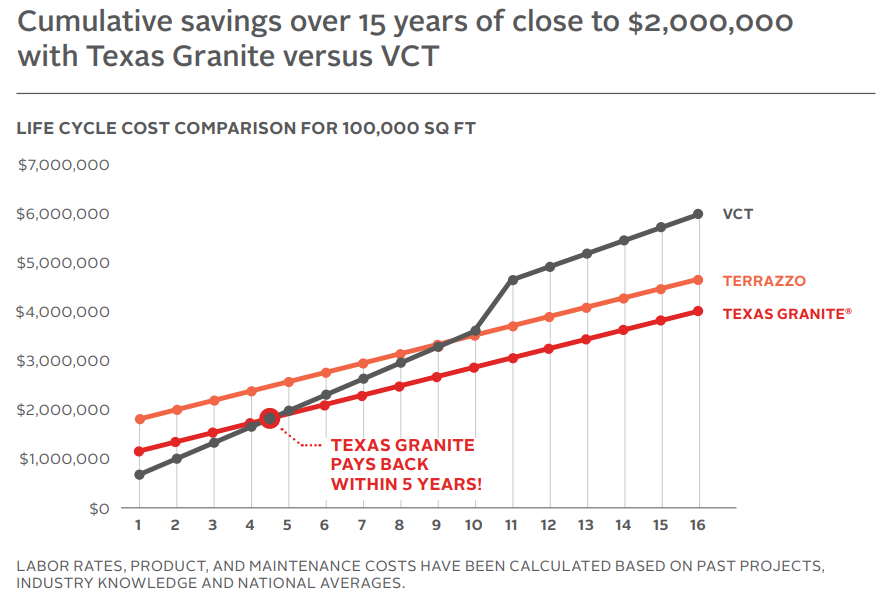
Advancements in flooring technology have led to low-maintenance solutions that, despite a higher initial cost, provide significant savings over the life of the space. Products like American Builtrite’s Texas Granite require less labor and fewer chemicals, lowering both environmental impacts and maintenance costs.
Comprehensive Benefits of Life-Cycle Cost Analysis
LCCA is not only about evaluating the costs but also enhancing the quality and functionality of the design. It provides a holistic view by considering initial, replacement, maintenance, and disposal costs. Utilizing tools like American Builtrite Texas Granite Flooring’s Life Cycle Cost Analysis Tool.
Key Components of LCCA
- Initial Costs: May include land acquisition, construction, and equipment.
- Operational Costs: Include energy and water costs, influenced by consumption rates and building efficiency.
- Maintenance and Repair Costs: Can vary significantly depending on building type and maintenance standards.
- Replacement and Residual Values: Estimate the timing of necessary replacements and the salvage value at the end of life.
- Non-Monetary Benefits or Costs: Consider impacts like aesthetics, security, and occupant comfort, which can also influence long-term value.
Tools and Applications
The LCCA method utilizes discounting techniques to compare costs at different times, making them equivalent for comparison. Tools like the Building Life-Cycle Cost (BLCC) Program support these analyses by simplifying the computational process.
Conclusion
Implementing LCCA early in the design process helps capitalize on long-term savings and operational efficiencies, encouraging designs that offer greater value over their lifespan. By focusing on comprehensive cost analysis, durability, and occupant comfort, LCCA aids in creating spaces that are not only cost-effective but also beneficial for users in the long run.